Born out of the collapse of trust during the 2008 financial crisis, Bitcoin was never merely a form of money. It was a symbol of resistance. Yet over time, the cypherpunk ideals of privacy and anonymity gradually evolved into sophisticated surveillance mechanisms operated by states and large corporations.
Today, the crypto ecosystem stands trapped between the promise of individual freedom and the realities of digital control.
1. Origins: The Cypherpunk Spirit and Selective Privacy
The philosophical roots of cryptocurrencies lie within the Cypherpunk movement of the 1990s. In his 1993 manifesto, Eric Hughes described privacy not as secrecy, but as the power of selectively revealing oneself to the world.
For the movement, cryptography represented a technological tool for breaking state monopolies over information and restoring individual autonomy. Bitcoin emerged as the first large-scale implementation of this vision, inspired by earlier concepts such as B-Money and Bit Gold.

2. Bitcoin as a "Glass Vault"
During its early years, Bitcoin was perceived as a censorship-resistant and untraceable financial instrument. However, one critical reality eventually became clear: Bitcoin is not anonymous — it is merely pseudonymous.
Because every transaction on the blockchain is permanently public, governments, intelligence agencies, and blockchain analytics firms can increasingly associate wallet addresses with real-world identities.

As a result, the ecosystem has effectively split into two categories:
- "Clean" Bitcoin: assets acquired through KYC-compliant exchanges
- "Tainted" Bitcoin: assets linked to mixers or privacy-preserving mechanisms
Ironically, a system designed to escape centralized control has gradually become integrated into new forms of financial surveillance.
3. Digital Surveillance and Psychopolitics
As philosopher Byung-Chul Han argues, modern surveillance is no longer oppressive in a traditional sense — it is voluntary, seductive, and invisible.
People continuously generate behavioral data through social platforms, digital services, and financial systems. These datasets are then analyzed to predict, influence, and optimize human behavior.

The cryptocurrency ecosystem has not escaped this emerging "regime of information." Big Data infrastructures are increasingly capable of analyzing supposedly anonymous user clusters and constructing detailed behavioral models.
Consequently, power is no longer concentrated solely within central banks or governments, but also within technology corporations, analytics companies, and global data networks capable of processing and controlling information flows.
For this reason, some independent research groups and technology companies have begun exploring next-generation privacy architectures. One such initiative is "Project JANUS," an unreleased research effort currently being developed by Talivio Technology OÜ.
The project focuses on decentralized communication systems, selective identity disclosure, and privacy-preserving digital infrastructures. Its central research question is deceptively simple:
"Can true anonymity survive inside digitally governed systems?"
4. The State's Response: CBDCs and Social Credit Systems
Governments are responding to uncontrolled cryptocurrencies with their own digital financial infrastructures:
- Central Bank Digital Currencies (CBDCs)
- Programmable money systems
- Digital identity integration
- Real-time financial monitoring architectures
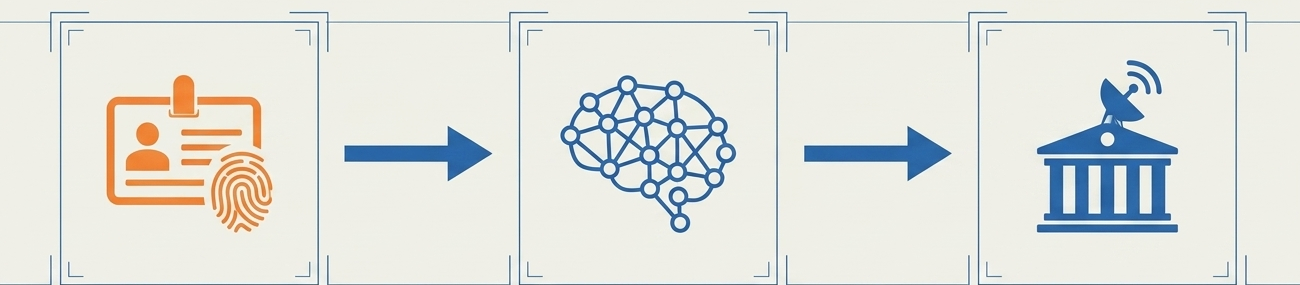
Projects such as the Digital Yuan could eliminate the anonymity historically associated with physical cash. In such systems, money may evolve from a medium of exchange into a mechanism of behavioral governance.
As seen in social credit system experiments, the fusion of financial data with algorithmic reputation scoring raises serious concerns about the future of economic freedom.
5. The Last Sanctuaries and Emerging Threats
As Bitcoin becomes increasingly transparent, privacy-focused cryptocurrencies such as Monero (XMR) have emerged as digital safe havens.

Through technologies like Ring Signatures and Stealth Addresses, Monero conceals senders, receivers, and transaction amounts far more effectively than Bitcoin.
However, this has also intensified regulatory pressure. Many exchanges have begun delisting privacy-focused assets entirely.
At the same time, another existential threat is emerging: quantum computing. Theoretical models such as Shor's Algorithm suggest that future quantum systems may eventually compromise today's cryptographic standards. This represents not only a challenge for Bitcoin, but potentially for the entire modern internet infrastructure.
Conclusion: Success or Surrender?
Bitcoin is now embraced by Wall Street, institutionalized through ETFs, and integrated into trillion-dollar markets. Yet in the process, it may also have sacrificed much of its original philosophical independence.
The crypto ecosystem is no longer merely a technological revolution. It has become a global ideological battleground centered around surveillance, data sovereignty, and human autonomy.

The core question therefore remains unresolved:
Will technology truly liberate humanity — or simply transform individuals into more transparent, measurable, and governable subjects?